By Carwyn Graves
School food matters a lot to us at Cegin y Bobl. At the heart of our work lies our whole-school approach to food – we believe that the opportunities are there in Wales to give every child in our schools a rounded food education, with fantastic food on their plates every day.
We were pleased to see the publication of a new evaluation of Welsh Government’s Universal Primary Free School Meals Policy last month. It shows that this ambitious policy is making some difference to ensuring no child goes hungry in school. But for school food to make the difference we all need it to, we think there are two ingredients missing from much of the current discussion.
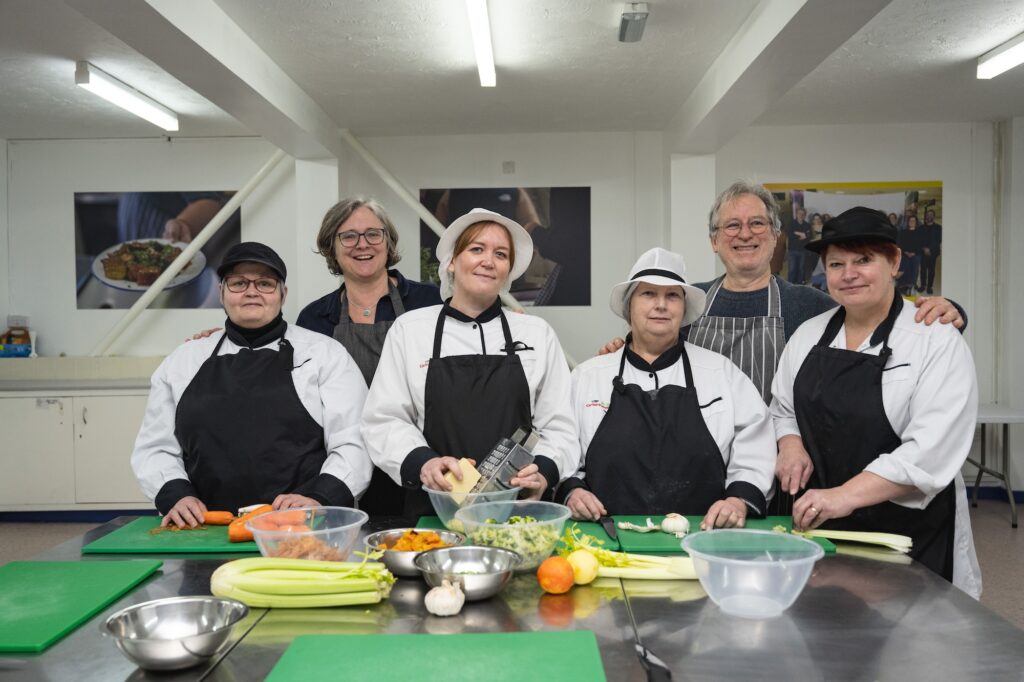
Photo: Carmarthenshire County Council
Deliciousness
Many of us are fortunate enough to make choices about what we eat based on health concerns. But as adults, almost all of us will buy and prepare the food we want to eat because it’s tasty.
Somehow, this essential ingredient has gone missing from most of the school food agenda in Wales. Of course, the food we give our children should be nutritious. The money spent on it should support sustainable farming and local jobs. But for children to have the chance to develop a lifelong relationship with vegetables and fruit, oily fish and pulses – it all needs to be yummy.
Academia is catching up with what parents have always known – eating pleasure is a huge factor in healthy eating. Ignoring this as the new regime of free-school meals embeds in Wales and as these Government reviews come out, risks us putting some children off vegetables for life.
Cooks
Thankfully we have a significant workforce with representatives in every school who can do more than almost anyone to help with this, and whose efforts are not always well served by the current frameworks around school food.
School cooks have been around in Wales for the best part of a century. That is a proud legacy of serving the next generation – which many countries lack. But the role of school cooks has too often been undervalued and undermined by systems and political environments happy to see food as little more than an afterthought.
The new evaluation of school food in Wales is a case in point – it doesn’t mention ‘cooks’ or ‘catering staff’ once, relegating these hard-working lynchpins of the system to the status of nameless ‘catering providers’. This is more than just a missed opportunity or a matter of semantics; this is about whether we want school food to simply fill bellies, or whether we see it as an essential investment in all children’s education and preparation for life.
The work of school cooks has the potential to significantly improve the quality of food served to our children; their enjoyment of it and thus their ability to learn in school. It is work that is currently poorly paid and undervalued – and also highly resistant to AI-led automation.
School food matters…
Both of these reasons are why we think there is plenty more work to be done for school food in Wales to come close to realising its potential. It could be the means by which children are introduced to the pleasures of good food, feeding their brains and their bodies, and supporting nature-friendly producers. It could provide meaningful work for large numbers of staff who play a key role in children’s education.
And it may be the case that the shortfalls identified in the report have something to do with the current absence of both flavour and cooks from the entire debate…
Carwyn Graves is co-founder of Cegin y Bobl (The People’s Kitchen), Wales’ leading food education charity